
Is Portland, Maine Walkable? A Neighborhood-by-Neighborhood Guide
Yes, Portland, Maine is one of the most walkable small cities in the country, and the peninsula is its walkable heart. Here is how the neighborhoods stack up, plus a few Everrow stays where you can park the car and leave it.
Short answer: yes. Portland, Maine is genuinely walkable, and on the peninsula it is the kind of place where you can park the car on arrival and not touch it again until you leave. Walk Score gives the city as a whole a rating in the mid-60s, which sounds modest until you remember that number averages in the car-dependent neighborhoods at the edges of town. The peninsula, where almost everything a visitor actually wants to do is concentrated, scores in the 90s. That is Walk Score’s “Walker’s Paradise” tier, the same bracket as the dense cores of much larger cities.
What makes Portland special is not just the score. It is the scale. The peninsula is barely three miles end to end, the streets are flat to gently rolling, and the best of the city, the working waterfront, the restaurants, the breweries, the museums, two ocean-facing promenades, is stitched together by sidewalks you can cover on foot in an afternoon.
THE BOTTOM LINE
Portland’s peninsula neighborhoods, the Old Port, West End, East End, Munjoy Hill, and Bayside, are all highly walkable, with Walk Scores in the high 80s and 90s. From a centrally located stay you can reach restaurants, the waterfront, parks, and the ferry terminal without a car. The further you get from the peninsula, the more you will want one.
What “Walkable” Actually Means Here
Walkability is not just about whether sidewalks exist. It is about how much of daily life you can reach on foot. On the Portland peninsula, the answer is: nearly all of it. Coffee, dinner, a gallery, a harbor view, a loaf of bread, a pint of locally brewed beer, and a walk along the water are all routinely within a five to fifteen minute stroll of one another.
A few things make the peninsula unusually friendly to people on foot:
- It is compact. The whole peninsula is about three miles long and a mile wide. Even a walk clear across it tops out around 45 minutes.
- It is flat where it counts. The Old Port and waterfront are level. Munjoy Hill earns its name, but the climb buys you the best views in the city.
- The grid is forgiving. Streets are short, intersections are frequent, and you are rarely more than a block or two from somewhere you want to be.
- The destinations are clustered. Restaurants, shops, and bars are concentrated rather than spread out, so a single outing easily strings together several stops.
The Peninsula Neighborhoods, Ranked by Walkability
Where you stay shapes how walkable your trip feels. If you want to go deeper on the character of each area, our local’s neighborhood guide to where to stay in Portland, Maine breaks down the vibe of each one. Here is how they rank for getting around on foot.
Old Port and the Waterfront, Walker’s Paradise
This is the most walkable square half-mile in Maine. Cobblestone streets, the working waterfront, the ferry terminal, and a dense run of restaurants, bars, and shops all sit within a few blocks of one another. Stay here and your car will not move. The Casco Bay Lines ferry terminal, your gateway to the islands of Casco Bay, is an easy walk, as is the Old Port’s nightlife and Commercial Street’s seafood.

West End, Walker’s Paradise
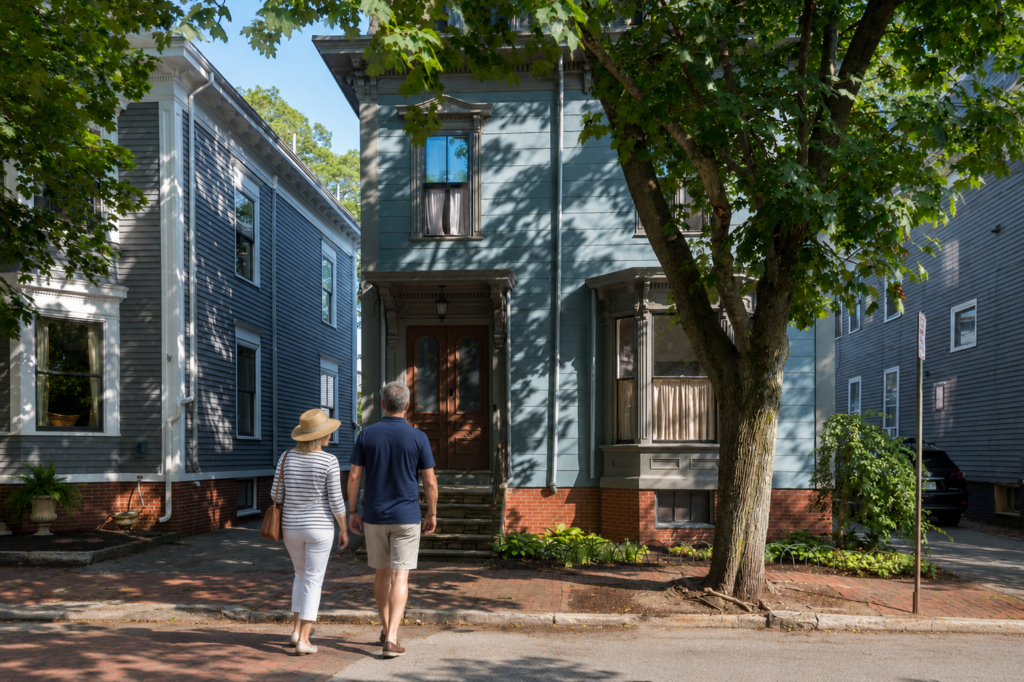
The West End is the peninsula’s most beautiful residential neighborhood, all Victorian and Federal townhomes on tree-lined streets, and it is wonderfully walkable. The Western Promenade offers sunset views over the Fore River, Deering Oaks Park and the Portland Museum of Art are short walks away, and the restaurants of the Old Port are a flat 10 to 15 minute stroll east.
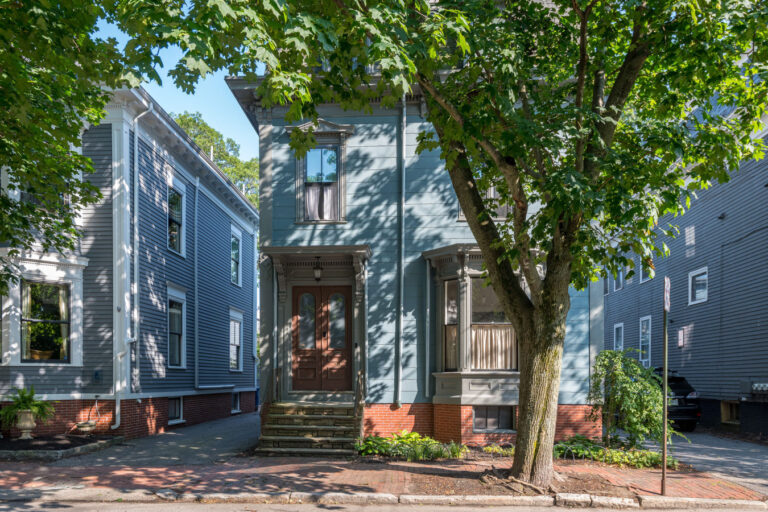
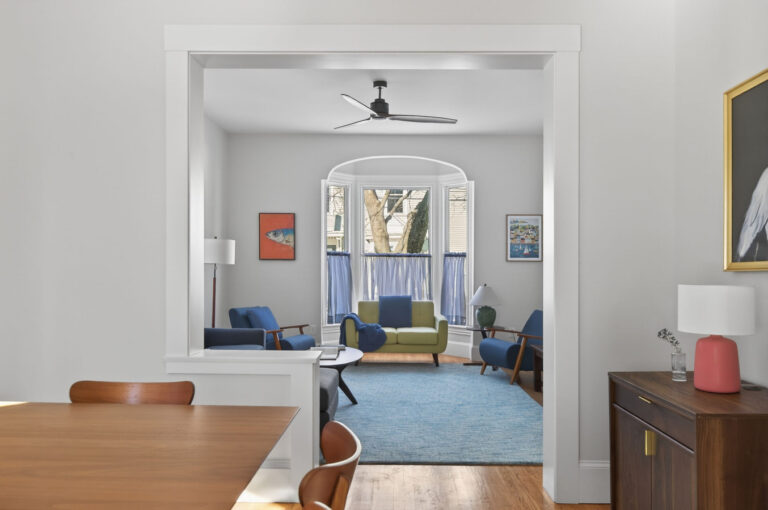
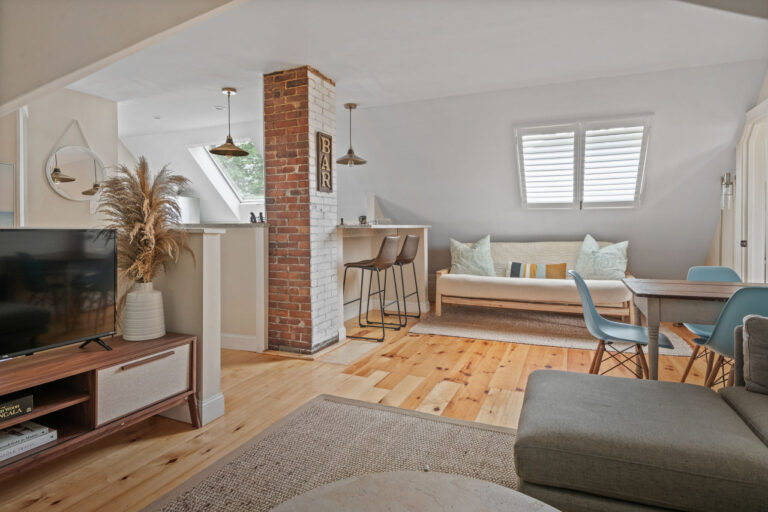
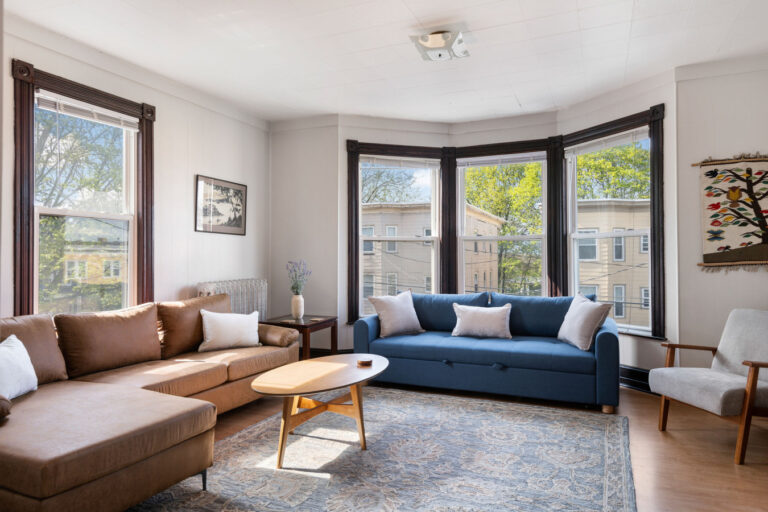
For a sense of just how walkable the West End really is, our guests at Knock on Wood sit roughly a five-minute walk from the Western Promenade, Deering Oaks Park, and the Portland Museum of Art all at once.
East End and Munjoy Hill, Very Walkable
Munjoy Hill rewards the climb. The Eastern Promenade wraps the neighborhood in ocean views, the Eastern Prom Trail follows the water around Back Cove, and Washington Avenue’s wave of newer restaurants and breweries has made the East End one of the city’s most exciting places to eat. It is a touch removed from the Old Port, but still an easy walk, and the payoff is the best scenery on the peninsula.
Bayside and Parkside, Walkable and Connected
These neighborhoods sit just inland of the action and serve as the connective tissue of the peninsula. Bayside is home to the trailhead for the Back Cove Trail, a 3.5-mile loop that is one of the most popular walks and runs in the city. From here, the Old Port, the West End, and Munjoy Hill are all comfortably on foot.
When You Will Want a Car
Honesty matters in a guide like this. Portland’s walkability falls off as you leave the peninsula. The further-out neighborhoods, the larger grocery stores, and most of Greater Portland’s attractions, from L.L.Bean’s flagship in Freeport to the lighthouses of Cape Elizabeth, are a drive away. If your trip is centered on the peninsula, you can skip the car entirely and rely on walking, the occasional rideshare, and the Casco Bay ferries. If you plan to range across southern Maine, you will want wheels, and our roundup of places to stay just outside the city is a good place to start.
The good news for visitors is that the most memorable parts of a Portland trip, the food, the harbor, the historic streets, the ocean views, are concentrated in exactly the walkable core where Everrow’s peninsula stays are located.
So, Is Portland, Maine Walkable?
On the peninsula, it is one of the most walkable places you will find in New England. Book a centrally located stay and the city opens up on foot the moment you drop your bags, no parking, no driving, just a flat, beautiful, three-mile peninsula laid out for walking. Park once, and let the city do the rest.
Stay close to everything in this guide.
A small collection of Everrow-managed homes within a short walk or drive of the places in this guide — chosen and maintained by a local team.